Disclosure: We may earn a commission if you sign up through links on our site at no additional cost to you. Read our full FTC Disclosure and Review Methodology.
Most people comparing Xero and Zoho Books already know the answer, whether they admit it or not. If you’ve got an external CPA or bookkeeper, or you’re planning to hire one, that person almost certainly knows Xero cold and has maybe never opened Zoho Books. If you’re already living inside Zoho CRM or Zoho One, adding Books is the path of least resistance — it just plugs in. That’s the real fork here, more than any feature checklist.
Both products are genuinely good — this isn’t a “one of these is secretly bad” situation. But they’re built for different-shaped businesses, and the gap shows up fast once you get past the marketing pages. Below: real 2026 pricing, what daily reconciliation actually feels like, user limits, how much automation you actually get, and where the “cheaper” option quietly costs more.
Quick Verdict: Which Should You Choose?
Go with Xero if an outside CPA or bookkeeper touches your books, you’re running ecommerce across a few channels and need a pile of app integrations, or your team’s growing and a per-seat fee would start to hurt. It’s still the fastest reconciliation workflow around, and it connects to more than almost anything else out there.
Go with Zoho Books if you’re already in Zoho CRM or Zoho One, you want to build your own workflow automation instead of bolting on a third-party tool, you’re solo and under $50,000 a year (the free plan is genuinely for you), or you want a real client portal without upgrading your whole stack to get one.
Quick Comparison Table: Xero vs Zoho Books
| Feature / Metric | Xero | Zoho Books |
|---|---|---|
| Best For | Growing small businesses, ecommerce, CPA collaboration | Solopreneurs, service agencies, Zoho ecosystem users |
| Starting Price (US) | $25/mo (Early) | Free (under $50k rev) or $20/mo (Standard) |
| User Limits | Unlimited on all standard plans | Capped by tier (1 to 15 users; add-ons available) |
| Accountant Access | 1+ external accountant invite (free) | 1 external accountant invite (free) |
| Bank Feeds & Reconciliation | Industry-leading auto-matching & rule engines | Rule-based reconciliation with auto-categorization |
| App Marketplace | 1,000+ third-party integrations | ~100+ integrations + native Zoho Suite sync |
| Custom Automations | Basic repeating invoices & payment reminders | Advanced native workflow rules, webhooks & Deluge |
| Inventory Management | Available on Growing/Standard tiers ($50–$55/mo) | Unlocks on Professional tier ($50/mo) |
| Multi-Currency | Available on Established ($90/mo) | Unlocks on Professional tier ($50/mo) |
| Client Portal | Basic online invoice view & payment | Comprehensive customer portal (estimates & statements) |
Pricing Breakdown & The “Hidden Cost” Equation
Zoho Books looks cheaper the moment you land on the pricing page. It usually is, for a while. Whether that stays true depends almost entirely on how many people on your team need a login.
1. Xero Pricing & Plan Limits
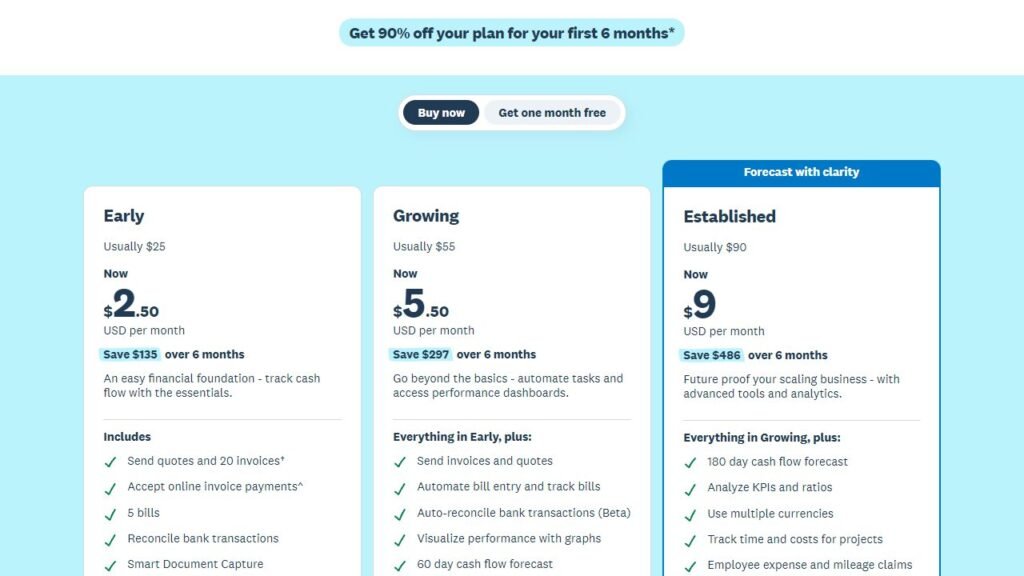
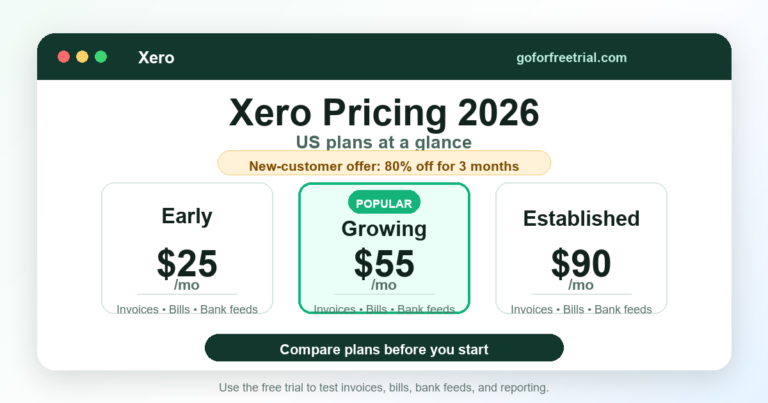
Xero prices around transaction volume and feature depth, not headcount. Early runs $25/mo but caps you at 20 invoices/quotes and 5 bills a month — fine for a micro-consultant, tight for almost anyone else. Growing, at $55/mo, is where most businesses actually land: unlimited invoicing, unlimited bill entry, automated bank reconciliation. Established ($90/mo) adds multi-currency, expense claims, project tracking, and the deeper analytics.
The advantage worth noting: every standard Xero plan includes unlimited seats. Two employees or twenty people approving purchase orders and pulling reports — same base price either way. For regional pricing and current promos, see our full Xero Pricing Guide and Xero Promo Codes.
2. Zoho Books Pricing & User Caps
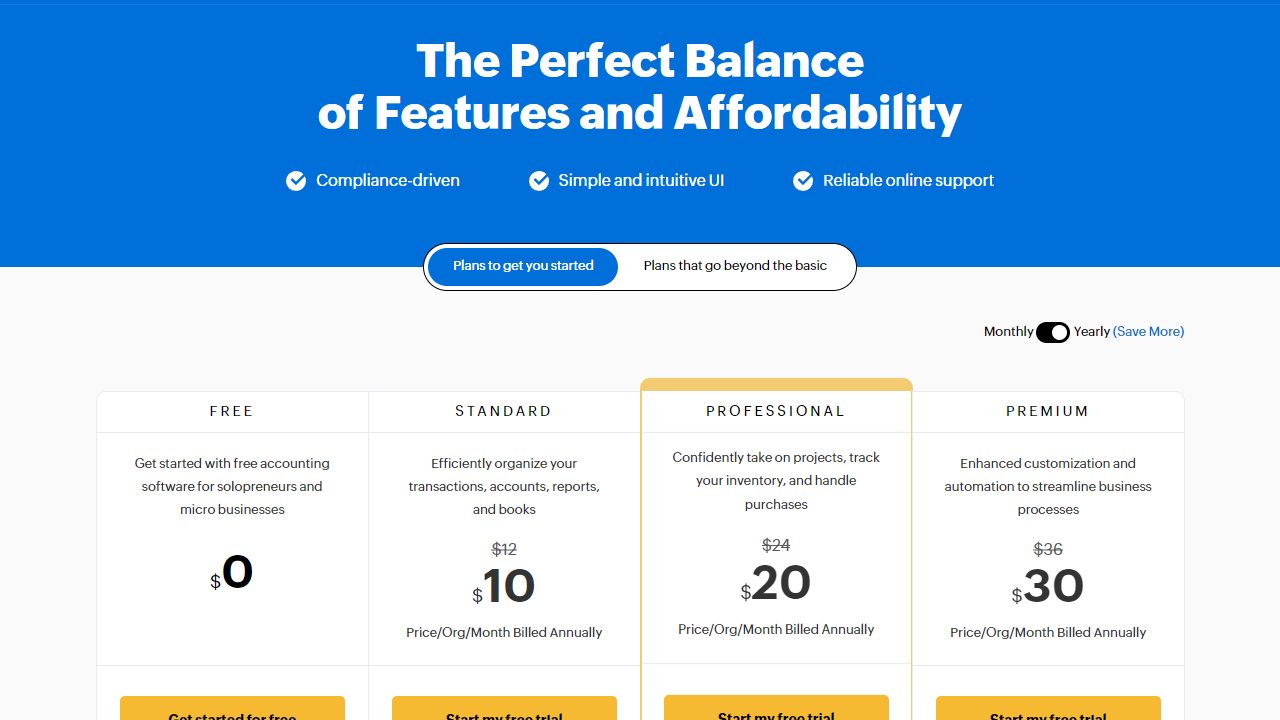
Zoho Books ties its tiers to annual revenue, transaction volume, and — this is the part people miss — a hard user cap. The Free Plan covers anyone under $50,000 in annual revenue: 1 user plus 1 accountant, up to 1,000 invoices a year. Standard ($20/mo, or $15 billed annually) gets you 3 users, 5,000 invoices, recurring expenses, and custom fields. Professional ($50/mo, or $40 annually) bumps that to 5 users, 10,000 invoices, purchase orders, sales orders, basic inventory, and multi-currency. Premium ($70/mo, or $60 annually) gets you to 10 users and 25,000 invoices, plus custom reports and advanced workflow rules. And Elite/Ultimate ($150–$275/mo) is for multi-company setups running at real volume, up to 15 users.
Where it catches up to you: once you go over your plan’s user cap, you’re buying add-on seats at $3–$5/user/month. Eight employees who all need to touch billing or log expenses? You’re either on the $70/mo Premium plan or stacking add-on seats — do the math before you commit.
5 Core Differences That Impact Daily Operations
1. Bank Feeds & Daily Reconciliation
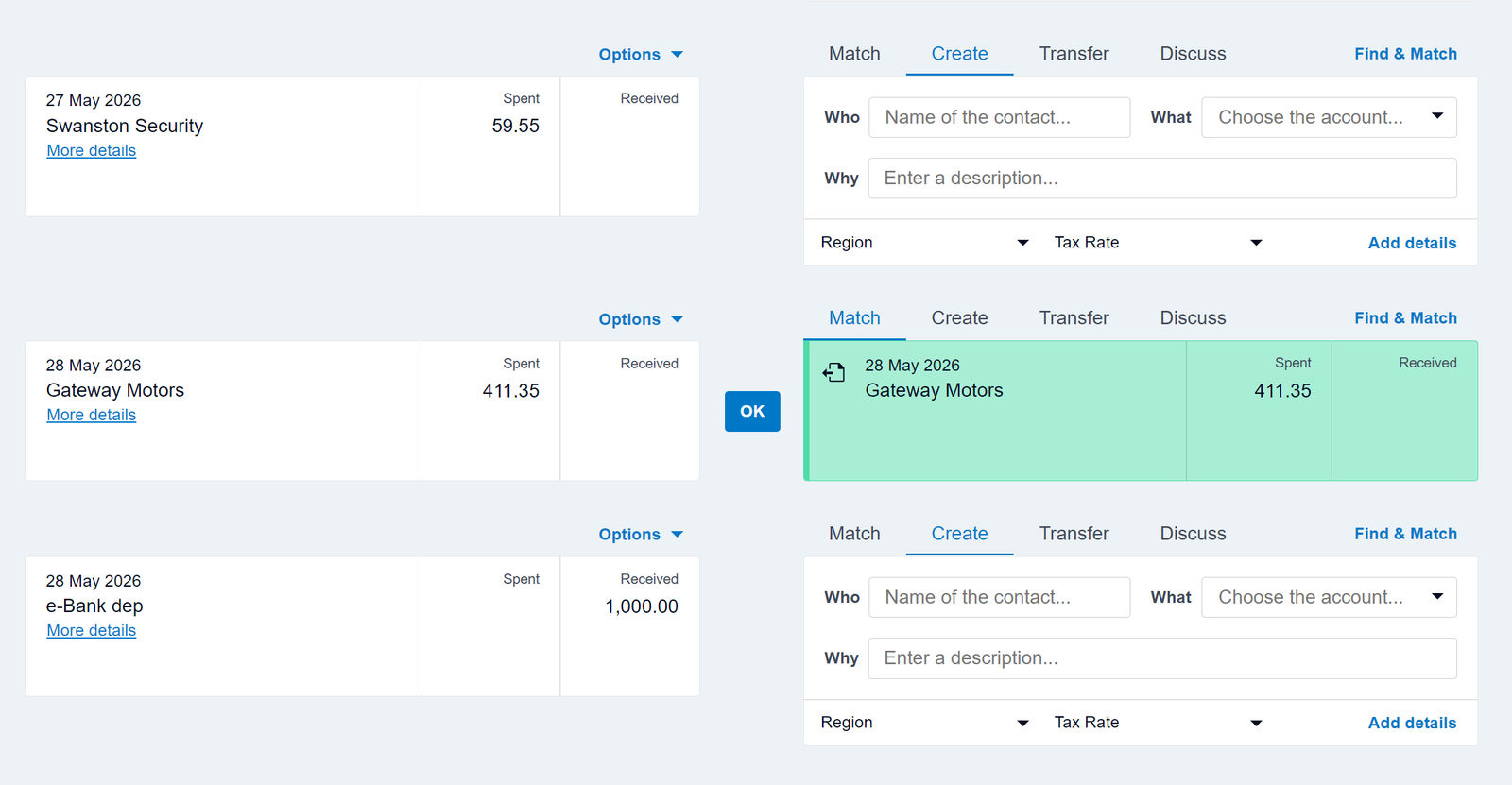
This is Xero’s strongest single feature. It suggests matches, picks up patterns across recurring bills, and splits transactions without much friction. If you’re dealing with a stack of small daily transactions — Stripe payouts, Shopify, PayPal — Xero clears batch deposits in fewer clicks than almost anything else on the market. Zoho Books’ bank feeds are perfectly solid, with automatic categorization rules, but multi-line split reconciliations take a bit more manual work.
2. Collaboration & Team Access
Xero’s user permissions are granular and free — read-only for leadership, invoice-only for sales reps, full access for your bookkeeper, none of it touching your monthly bill. Zoho Books gates access by plan tier instead, though its custom role creation is genuinely good once you’re paying for the tier that allows it.
3. Workflow Automation & Customization
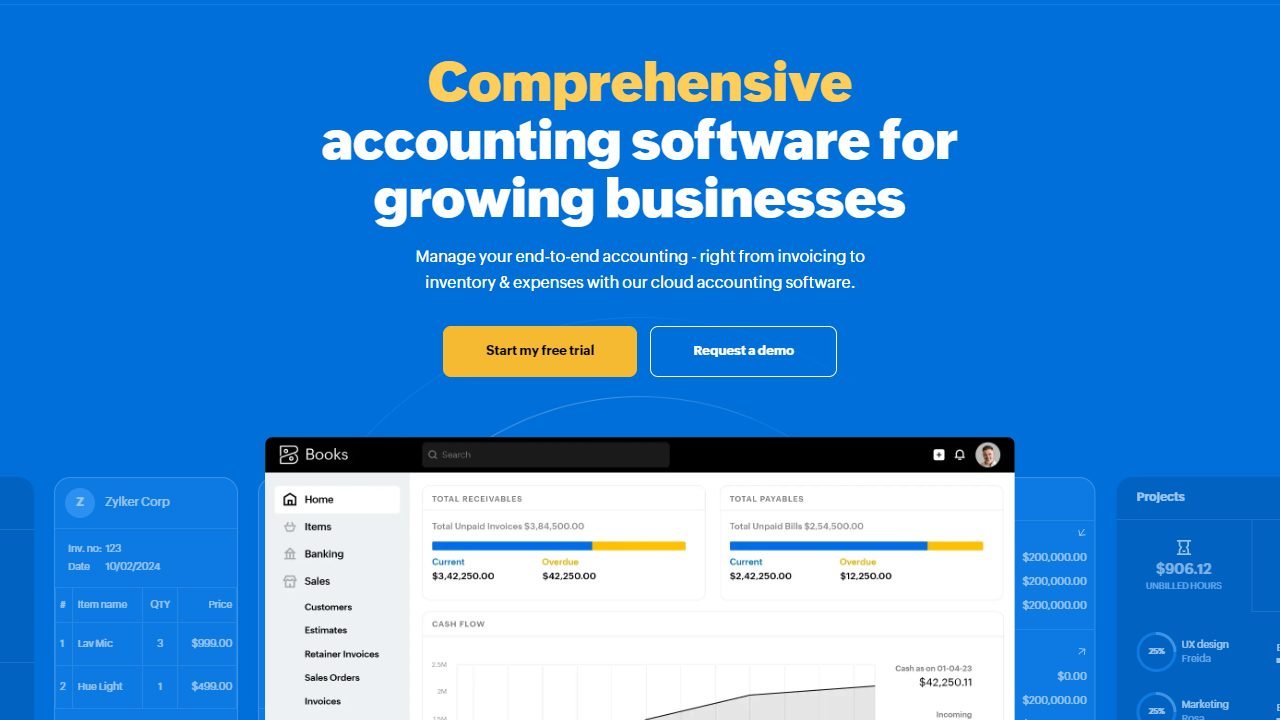
No contest here — Zoho Books wins. You can set up automated email alerts, field updates, custom webhooks, even custom Deluge scripts, all inside settings. Want an account manager pinged by SMS the moment an invoice hits 7 days overdue? You can build that without paying for Zapier on top. Xero’s automation, by comparison, mostly means repeating invoices, standard payment reminders, and its reconciliation auto-matching.
4. App Ecosystem & E-Commerce Integrations
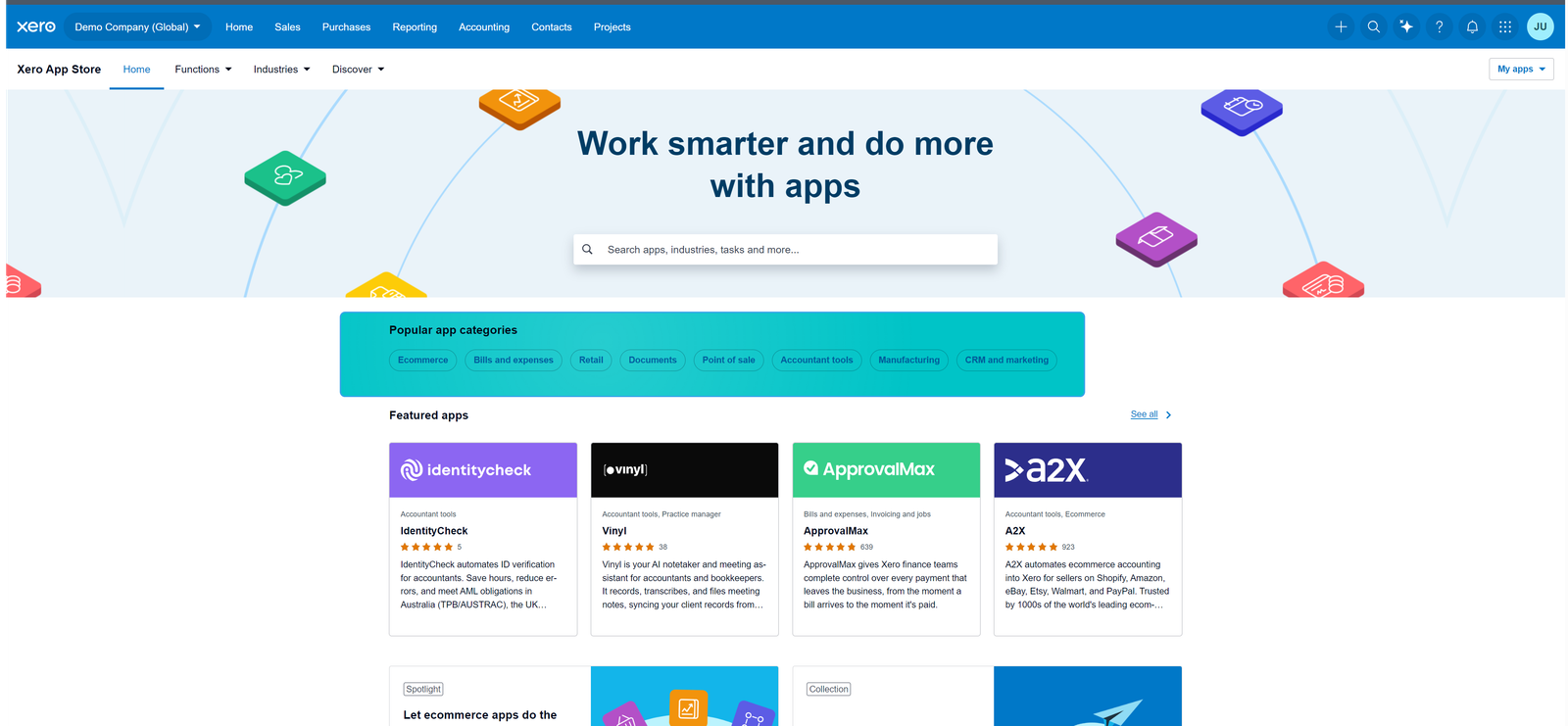
The Xero App Store has over 1,000 vetted integrations — Shopify, Amazon, A2X, Dext, Gusto, DEAR/Cin7. If you’re running ecommerce, that’s where Xero pulls ahead (see our Best Accounting Software for Ecommerce guide). Zoho Books connects beautifully to the 40-plus apps inside the Zoho Suite — CRM, Inventory, Desk — but step outside that world and the marketplace thins out fast.
5. Invoicing & Financial Reporting
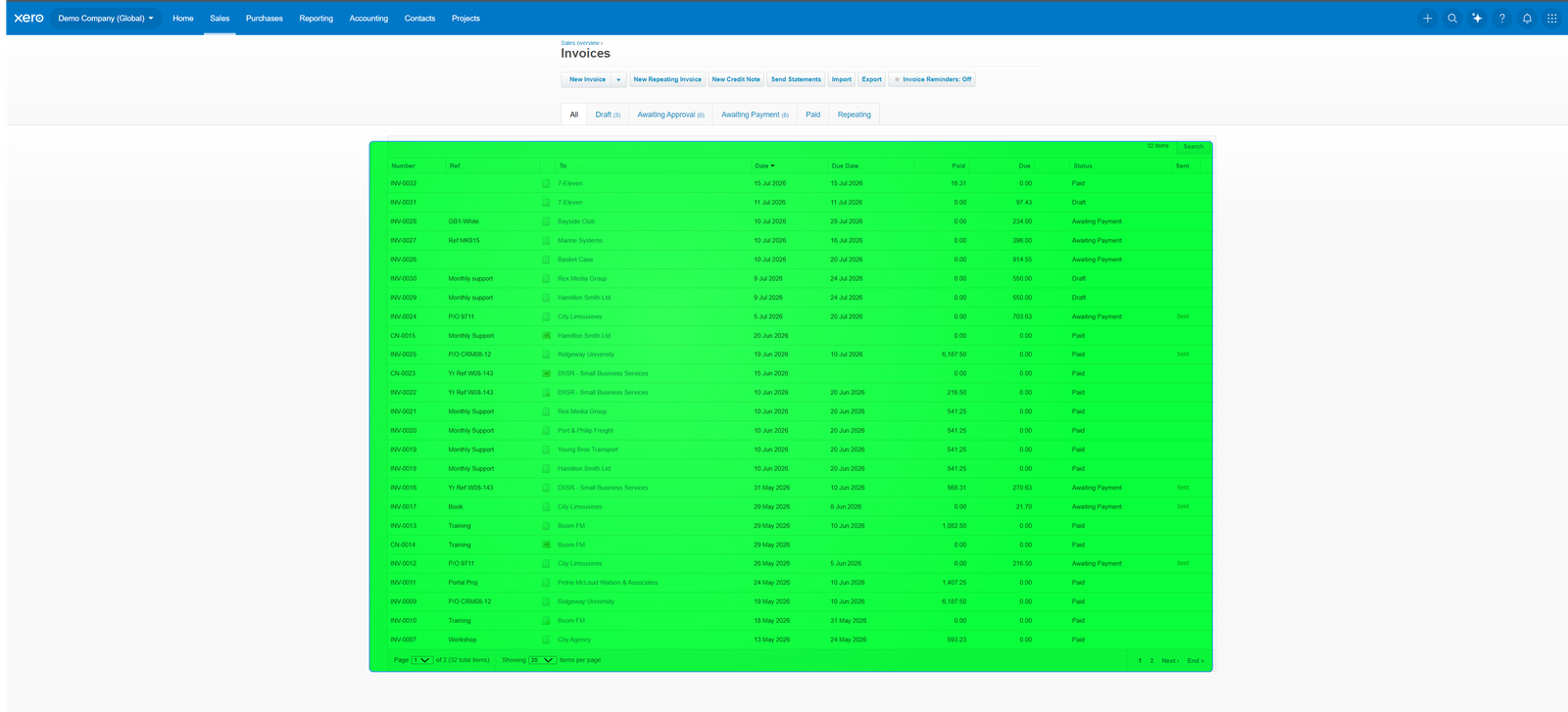
Xero includes basic tracked inventory starting at Growing/Standard ($55/mo), but multi-currency is locked behind the top Established tier ($90/mo). Zoho Books unlocks both inventory and multi-currency together at Professional ($50/mo) — which makes it the more affordable pick if you’re a small importer or serving international clients on a tight budget.
Accountant Compatibility: The Deciding Factor
Before you pick anything, ask your CPA or bookkeeping firm what they actually use. Alongside QuickBooks (see our Xero vs QuickBooks Comparison), Xero is the one nearly every modern accounting practice in the US, UK, Australia, and New Zealand already knows. If your accountant has never touched Zoho Books, expect to pay for the learning curve at tax time — extra billable hours while they figure out the interface or export trial balances by hand.
Xero: Honest Pros & Cons
What’s good: unlimited users on every standard plan, an accountant on nearly every street corner already knows how to use it, 1,000+ App Store integrations, and reconciliation that’s still the fastest in the business.
Where it falls short: the entry plan’s invoice/bill limits are genuinely tight (20 invoices, 5 bills), multi-currency means paying for the top Established tier at $90/mo, and if you want real custom automation, you’re mostly out of luck.
Zoho Books: Honest Pros & Cons
What’s good: an actual free plan if you’re under $50k, deep native workflow rules and webhooks (down to custom Deluge scripts), tight integration across the whole Zoho One suite, and multi-currency plus inventory unlocked at just $50/mo.
Where it falls short: every plan has a hard user cap, so extra people mean extra add-on fees ($3–$5/user); fewer independent CPAs specialize in it; and the third-party app marketplace thins out fast once you step outside Zoho’s own ecosystem.
The Final Verdict
For most growing businesses, multi-person teams, and ecommerce sellers, Xero is the safer bet — the unlimited-user model, the reconciliation speed, and the fact that basically every accountant already knows it add up to less friction down the line.
But if you’re solo under $50k, already deep in Zoho One, or you’re the kind of operations person who actually wants to build out webhooks and custom client portals yourself, Zoho Books gives you a lot more for the money.
For more comparisons, check out our complete Xero Review, our roundup of the Best Accounting Software for 2026, and our guide to Best Free Bookkeeping Software.
Frequently Asked Questions
Is Zoho Books really free?
Yes — as long as you stay under $50,000 in annual revenue. That free tier is capped at 1 user plus 1 external accountant and 1,000 invoices a year. Cross $50k and you’re upgrading to a paid plan.
Does Xero charge extra per user seat?
No. Every plan, Early ($25/mo) through Established ($90/mo), includes unlimited users. That alone makes Xero a lot cheaper than it looks once you’ve got more than a couple of people touching the books.
Can I switch from Zoho Books to Xero later without losing data?
You can export your Chart of Accounts, contacts, items, and historical transaction journals as CSV and import them into Xero. There are also migration services like Movemybooks that handle the conversion for you.
Which software is better for a Shopify store?
Zoho Books Elite ($150/mo) has native connections for up to 2 Shopify stores. On Xero, most ecommerce sellers go through middleware like A2X instead, to automate payout reconciliation and cost-of-goods-sold tracking.