Updated May 27, 2026: Ecommerce accounting is changing because online retail is larger, more channel-diverse, and more automated than it was even a few years ago. US Census data shows US retail ecommerce sales reached $326.7 billion in Q1 2026, up 9.8% year over year, and ecommerce represented 16.9% of total retail sales on an adjusted basis.
Ecommerce Accounting Software Statistics and Trends for 2026
Ecommerce accounting software is no longer just a bookkeeping convenience. For online sellers, it has become a core system for understanding revenue, fees, refunds, inventory, tax, payouts, and cash flow. A store can grow fast and still lose visibility if sales data is trapped inside Shopify, Amazon, Walmart, Etsy, Stripe, PayPal, TikTok Shop, and shipping platforms.
This 2026 guide uses the charts you provided plus current ecommerce and accounting market signals to explain where the market is going, why online sellers need better accounting workflows, and which software features matter most for ecommerce businesses.
Key Ecommerce Accounting Statistics for 2026
- US ecommerce sales reached $326.7 billion in Q1 2026, according to the US Census Bureau’s quarterly retail ecommerce report.
- US ecommerce grew 9.8% year over year in Q1 2026, while total retail sales grew 3.9%.
- Ecommerce represented 16.9% of total US retail sales in Q1 2026 on a seasonally adjusted basis.
- The supplied market-growth chart estimates the global accounting software market at $22.7 billion in 2026, projected to reach $37.3 billion by 2030.
- The supplied market-share chart shows QuickBooks at 62.2%, ADP at 14.3%, Sage 50 at 10.3%, Xero at 8.9%, and others at 4.3% for SMB accounting software share.
- The supplied trends chart shows 78% automated bookkeeping adoption and 76% AI invoice-processing adoption among firms, with finance automation becoming a major back-office trend.
Accounting Software Market Growth: Why Ecommerce Sellers Are Investing
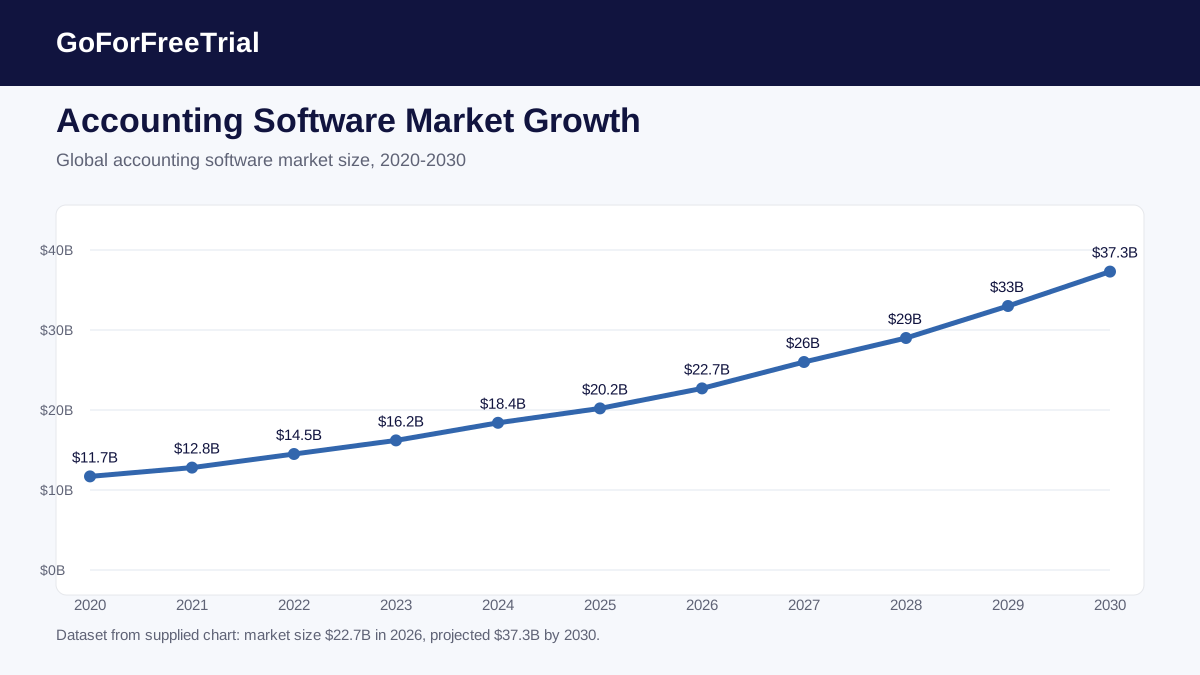
The accounting software market is expanding because small businesses are moving away from disconnected spreadsheets and manual bookkeeping. Your market-growth chart estimates the global accounting software market at $22.7 billion in 2026, with a projected path toward $37.3 billion by 2030. The chart also shows a 2026 to 2030 CAGR estimate of 13.2%.
For ecommerce sellers, this growth is not abstract. It reflects a real operational need. Online stores now manage high transaction volume, multi-channel orders, payment processor fees, returns, ad spend, sales tax, inventory movement, and marketplace payout statements. Accounting software is growing because businesses need systems that can turn that data into reliable books.
The key takeaway: ecommerce growth creates bookkeeping complexity, and bookkeeping complexity creates demand for cloud accounting, ecommerce connectors, payout reconciliation tools, inventory systems, tax software, and AI-assisted finance workflows.
Accounting Software Market Share: QuickBooks Leads, But Ecommerce Creates Room for Specialists
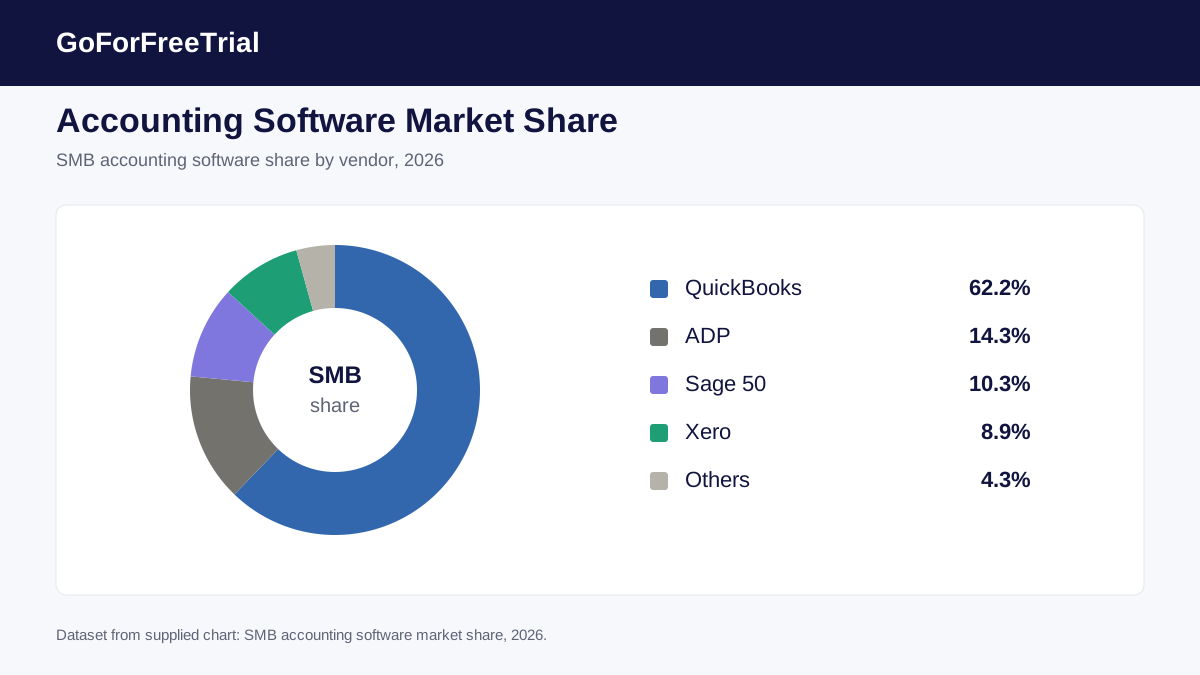
Your market-share chart shows a concentrated SMB accounting market, with QuickBooks at 62.2%, ADP at 14.3%, Sage 50 at 10.3%, Xero at 8.9%, and others at 4.3%. That concentration matters because many ecommerce accountants and bookkeepers build their workflows around QuickBooks Online or Xero first.
However, ecommerce accounting is different from general small-business accounting. A local service business might only need invoices, bills, bank feeds, and payroll. An ecommerce seller often needs marketplace settlement accounting, SKU-level inventory, sales tax separation, payment processor reconciliation, multi-currency handling, and channel-level profitability.
That is why specialist tools such as A2X, Link My Books, Synder, inventory systems, sales tax apps, and ecommerce analytics platforms can still win even when the core accounting ledger is dominated by larger products. The modern ecommerce accounting stack is usually a combination: one core accounting platform plus several connected tools that clean and enrich the data before it reaches the ledger.
Regional Accounting Software Trends: North America Leads, Asia-Pacific Grows Fastest
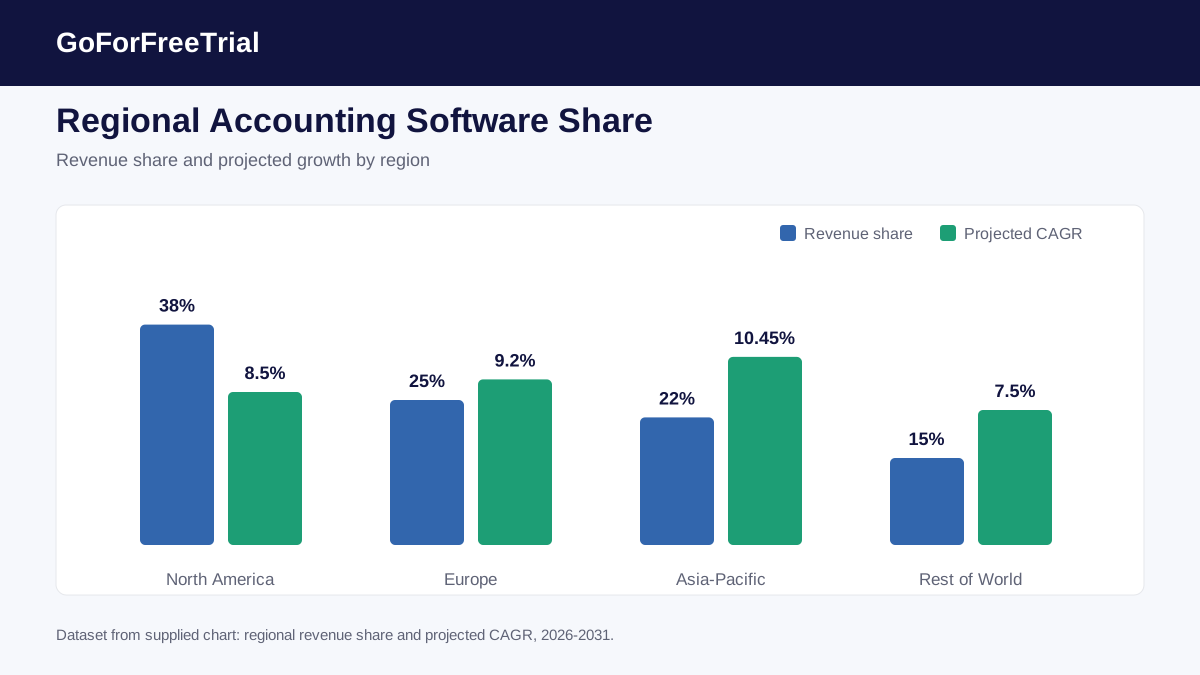
The regional chart shows North America with 38% revenue share, followed by Europe at 25%, Asia-Pacific at 22%, and Rest of World at 15%. It also estimates Asia-Pacific as the fastest-growing region, with a projected 10.45% CAGR from 2026 to 2031.
This pattern makes sense for ecommerce. North America has mature accounting software adoption, a large base of Shopify and marketplace sellers, strong accountant ecosystems, and high demand for integrations. Europe has strong ecommerce penetration and tax complexity, especially around VAT and cross-border selling. Asia-Pacific has rapid digital commerce growth, mobile-first sellers, marketplace adoption, and increasing demand for cloud finance tools.
For software buyers, the regional lesson is practical: pricing, tax features, payroll integrations, plan names, and compliance tools can vary by country. A Xero, QuickBooks, Zoho Books, or Sage plan in one region may not match the plan offered in another. Ecommerce sellers should choose tools based on the country where the business is registered, the marketplaces they sell on, and the tax rules they must follow.
Ecommerce Accounting Trends: Automation, AI, and Cloud Adoption
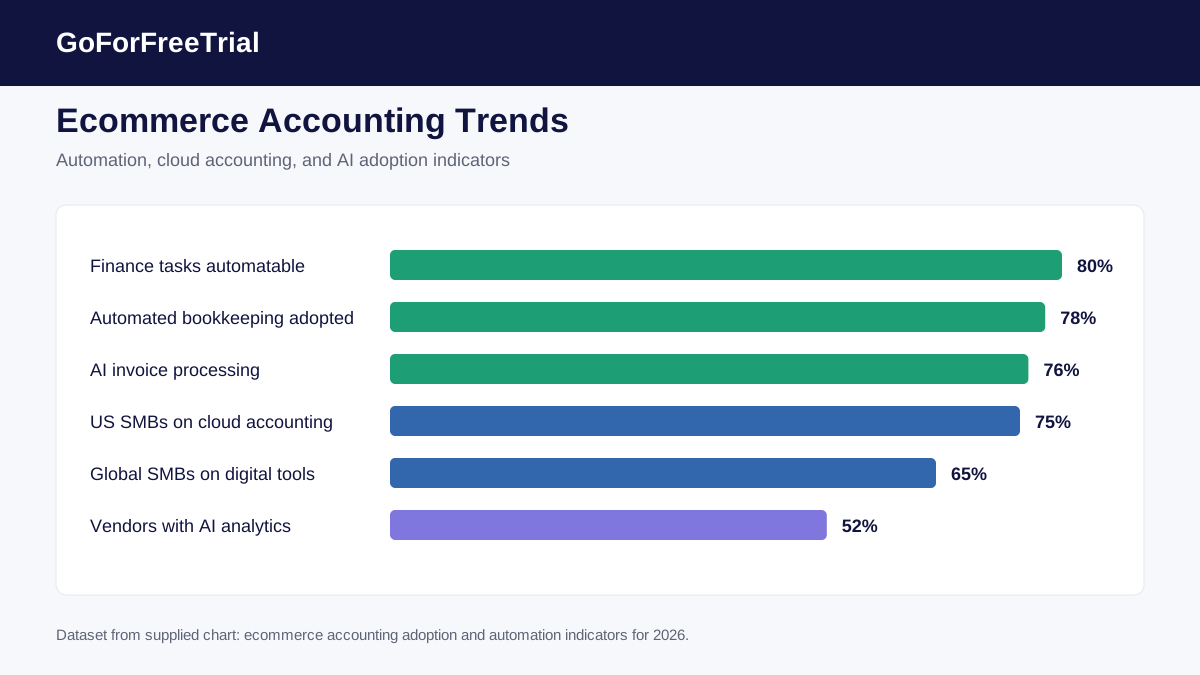
The ecommerce accounting trends chart highlights the big shift: repetitive finance work is being automated. It shows 80% of finance tasks as automatable with RPA and AI, 78% automated bookkeeping adoption, 76% AI invoice-processing adoption among firms, 75% US SMB cloud accounting use, 65% global SMB digital tool use, and 52% vendor AI analytics integration.
For ecommerce sellers, this matters because manual bookkeeping does not scale gracefully. More sales channels mean more payouts. More payouts mean more settlement statements. More settlement statements mean more fees, refunds, tax lines, adjustments, and deposits to match. Automation reduces the hours spent cleaning data before financial reports can be trusted.
AI is also moving into practical accounting tasks. The most useful AI features are not flashy. They are things like extracting invoice data, suggesting transaction categories, matching payments, flagging unusual fees, detecting duplicate bills, and helping owners understand why cash changed even when revenue increased.
Why Ecommerce Accounting Is Harder Than Standard Small-Business Accounting
Standard small-business accounting often starts with invoices, bills, bank feeds, payroll, and reports. Ecommerce accounting adds sales channels, payment processors, inventory, returns, shipping charges, marketplace fees, advertising spend, tax collection, and payout timing. A single bank deposit may represent hundreds of orders and dozens of accounting categories.
The biggest challenge is that ecommerce platforms usually do not deposit simple gross sales. Shopify Payments, Stripe, PayPal, Amazon, Walmart, Etsy, and other platforms often deposit net payouts after fees, refunds, holds, reserves, chargebacks, tax, and adjustments. If a seller records only the net deposit as revenue, reports can understate sales, hide fees, distort margins, and create tax confusion.
Good ecommerce accounting software solves this by separating the moving parts. It should record gross sales, discounts, refunds, shipping income, tax collected, marketplace fees, payment processing fees, cost of goods sold, and the final payout deposit in the right places.
Trend 1: Payout Reconciliation Becomes the Core Workflow
Payout reconciliation is the heart of ecommerce accounting in 2026. Online sellers need to match sales activity to deposits, but the deposit rarely equals the sales total. A clean reconciliation workflow explains the difference between the two.
For Shopify sellers, the accounting system needs to handle payment fees, refunds, chargebacks, and different payment providers. For Amazon sellers, it needs to handle referral fees, FBA fees, storage fees, advertising, reimbursements, reserves, and settlement timing. For Etsy, eBay, Walmart, and TikTok Shop, the same basic issue appears in different statement formats.
This is why ecommerce connectors are so valuable. Instead of pushing thousands of individual orders into the ledger, the best tools summarize settlement data into clean accounting entries that bookkeepers can reconcile against actual bank deposits.
Trend 2: Channel-Level Profitability Becomes a Must-Have
Online sellers increasingly need profitability by channel, not just total revenue. A brand may sell through Shopify, Amazon, Walmart, Etsy, wholesale, and social commerce. Each channel has different fees, ad costs, return rates, and customer behavior.
Revenue can look impressive while profit disappears through marketplace fees, shipping subsidies, returns, discounting, and paid advertising. Accounting software and ecommerce analytics tools are becoming more important because sellers need to know which channels are worth scaling and which channels are only producing top-line volume.
The best reports answer questions like: Which channel has the highest gross margin? Which marketplace has the most fee drag? Which products create refunds? Which channel is increasing revenue but reducing cash flow?
Trend 3: Inventory Accounting Gets More Serious
Inventory is one of the easiest areas to underestimate. Product businesses often look profitable until freight, duties, storage fees, shrinkage, returns, damaged goods, and stockouts are included. Ecommerce sellers need accounting systems that connect inventory value, cost of goods sold, purchase orders, and sales channels.
In 2026, more sellers are moving beyond simple stock counts. They want landed cost visibility, SKU profitability, inventory aging, reorder planning, and cash flow forecasts tied to upcoming purchase orders. A store with fast revenue growth can still struggle if too much cash is locked inside slow-moving inventory.
Small sellers may be fine with basic inventory features. Scaling sellers usually need a dedicated inventory platform connected to Xero, QuickBooks Online, or another accounting system.
Trend 4: Sales Tax Reporting Requires Better Data Separation
Sales tax is one of the biggest reasons ecommerce bookkeeping needs structure. Sellers must separate marketplace-collected tax from tax they collect directly. They also need to understand where customers are located, where inventory is stored, and whether economic nexus rules may apply.
Marketplace facilitator rules can reduce the seller’s collection burden on some channels, but they do not eliminate the need for clear records. A business still needs to know what was collected, who collected it, what was refunded, and what remains payable.
This is why accounting software, sales tax apps, and ecommerce connectors need to work together. If tax data enters the ledger incorrectly, cleanup becomes painful and reports become less useful for filing and cash planning.
Trend 5: AI Moves Into Practical Bookkeeping
AI will not remove the need for accurate accounting rules, but it will reduce repetitive work. The most useful AI features for ecommerce accounting are practical: receipt capture, bill extraction, transaction categorization, anomaly detection, payment matching, and cash flow explanations.
Xero has already announced AI-powered data capture and extraction initiatives, and the broader accounting software market is moving in the same direction. For ecommerce, AI has the most value when it helps sellers and bookkeepers spot issues faster: duplicate fees, unusual refunds, missing payouts, uncategorized expenses, or sudden margin changes.
The important point is that AI works best after the data pipeline is clean. If sales channels, payment processors, and inventory tools are not connected properly, AI may only make bad data look more polished. Clean integrations still come first.
Most Important Ecommerce Accounting Software Features in 2026
| Functie | Why It Matters | Best-Fit Seller |
|---|---|---|
| Payout reconciliation | Matches net deposits to gross sales, fees, refunds, and tax | Shopify, Amazon, Walmart, Etsy, eBay, TikTok sellers |
| Marketplace connectors | Turns settlement data into clean accounting entries | Multi-channel ecommerce sellers |
| Inventory and COGS tracking | Shows true margin and prevents inventory cash surprises | Product-based brands and resellers |
| Sales tax reporting | Separates marketplace-collected and seller-collected tax | Multi-state and cross-border sellers |
| Multi-currency support | Improves reporting for international sales and suppliers | Cross-border ecommerce businesses |
| Cash flow forecasting | Shows whether growth is sustainable after inventory and ad spend | Scaling stores with inventory cycles |
| AI-assisted bookkeeping | Reduces manual categorization and spots unusual transactions | Busy sellers and bookkeeping teams |
Best Accounting Software Types for Ecommerce Sellers
Core cloud accounting software
Core accounting platforms such as Xero, QuickBooks Online, Zoho Books, Sage, and FreshBooks are the general ledger and reporting foundation. They handle bank feeds, financial statements, bills, invoices, tax categories, and accountant collaboration.
Ecommerce accounting connectors
Connector tools such as A2X, Link My Books, Synder, and similar apps translate ecommerce data into accounting-ready entries. These tools are especially useful when marketplaces and payment processors produce complicated settlement reports.
Inventory and operations platforms
Inventory platforms help sellers track stock, landed cost, purchase orders, warehouse movements, and cost of goods sold. For scaling ecommerce brands, inventory accuracy can matter as much as bank reconciliation.
Sales tax and compliance tools
Sales tax tools help sellers manage tax calculations, nexus monitoring, filing workflows, and marketplace tax separation. They are most useful when a seller has direct-store sales across multiple states or countries.
How to Choose Ecommerce Accounting Software in 2026
- Map every sales channel. Include Shopify, Amazon, Walmart, Etsy, eBay, TikTok Shop, wholesale portals, POS, and manual invoices.
- Map every payment processor. Include Shopify Payments, Stripe, PayPal, Klarna, Afterpay, marketplace payouts, and bank transfers.
- Check payout complexity. If deposits include fees, refunds, reserves, tax, and multiple order days, you probably need an ecommerce connector.
- Choose summary or order-level posting. High-volume sellers usually need summarized settlement entries rather than thousands of individual invoices.
- Confirm inventory needs. Decide whether accounting software alone is enough or whether you need a dedicated inventory system.
- Review sales tax workflows. Make sure marketplace-collected and seller-collected tax can be separated cleanly.
- Test with real data. A free trial is useful only if you connect actual sales and check whether the bank feed reconciles cleanly.
Common Ecommerce Accounting Mistakes
- Recording net deposits as revenue and forgetting to separate fees, refunds, shipping, and tax.
- Importing every order as an invoice when summarized settlement entries would be cleaner.
- Ignoring marketplace reserves and payout timing in cash flow planning.
- Tracking inventory quantity but not landed cost or true cost of goods sold.
- Mixing marketplace-collected tax with tax the seller must remit directly.
- Choosing accounting software before checking whether it integrates with the seller’s actual channels.
2026 Outlook: Ecommerce Accounting Becomes an Operating System
The biggest 2026 trend is that ecommerce accounting is becoming more connected, automated, and operational. Sellers do not only want year-end tax records. They want to understand profit by product, profit by channel, payout timing, fee leakage, inventory cash needs, and whether growth is worth funding.
The best ecommerce accounting stacks will combine a core accounting ledger with clean connectors, inventory data, sales tax support, and increasingly AI-assisted workflows. The goal is not just faster bookkeeping. The goal is better financial visibility.
For small sellers, the next step is to stop treating bookkeeping as an annual cleanup task. For growing sellers, the next step is to build a reliable accounting stack before order volume makes the mess expensive. For established ecommerce businesses, the advantage is using accounting data to make sharper pricing, inventory, advertising, and channel decisions.
Sources and Chart Notes
- US Census Bureau Quarterly Retail E-Commerce Sales Report
- Shopify Global Ecommerce Trends Guide
- Xero AI-Powered Data Capture Announcement
- The market growth, market share, regional share, and ecommerce accounting trends charts were recreated from the chart HTML files supplied for this article.